

The Guide to Flawless Hotfix Rhinestone Applications
Are you looking for all the tips and secrets of custom rhinestone transfer application? You've come to the right place.
Our experience of performing application for millions of garments over the past decade has given us a few insights into the best techniques and methods for applying custom rhinestone transfers that will last through the lifetime of a garment. It is simple and easy to follow, you just need to follow a few steps to get it done right.
Three Ingredients of Flawless Application
Application Recipe
- Time:15 seconds
- Temperature:325 degrees
- Pressure:6 (heat press)
Temperature
The correct temperature is the most important ingredient for application of heat rhinestone transfers to a garment. Heat presses allow the user to set a specific temperature, but it is important to check the heating element for consistency and to ensure it is reaching the temperature on the display. We recommend checking temperature daily.
Time
The amount of time that a garment is under the heat press is a balancing act. Too long and the garment can get scorched, too short and the rhinestones will not heat to temperature and adhere to the garment. The proper timing of a press is also based on the fabric. Heat-sensitive fabrics, like synthetic fibers and light or white garments need to be pressed for the minimum time possible.
Pressure
Correct pressure settings are the most common reason for poor application of a heat transfer. Sufficient pressure ensures that the heat elements deliver the heat to the glue on the back of the stone and presses the glue to enter the fibers of the garment.
The Extra Secret Sauce
Do you want to know the ONE secret that will make your applications perfect every time?
Application Equipment
Poor
Iron
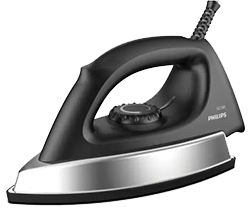
While it is possible to apply customs rhinestone transfers with a standard iron, it often leads to poor results. Since the iron does not cover the full transfer, it is necessary to move the iron across the design. This will tend to result in big differences in the time and pressure that is applied across the area of the transfer.
Good
Heat Press
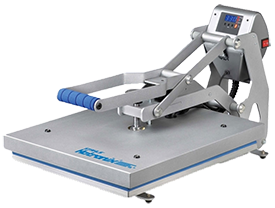
Heat presses are the standard method of applying custom rhinestone transfers to a garment. A heat press consists of an upper heated surface and a lower platen that the garment rests upon. Most heat presses are manually operated, or semi-manual and allow the user to set a specific temperature and increase or decrease pressure settings, although the pressure setting is not a precise as an automatic heat press.
Excellent
Automated Heat Press
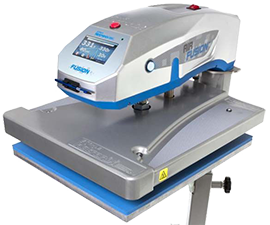
The most consistent method of pressing heat transfers or any type is with an automatic heat press, which uses compressed air pressure to lower the heat platen on the garment and provide a specific amount of pressure. Unfortunately, automatic heat presses are costly and an experienced user can achieve the same results with a manual or semi-manual heat press.
Custom Transfer FAQ


Enter email and get everyday discounts!